What unites them.
The Snowtailors team is short on purpose. Five instructors, five temperaments, and one shared understanding: that a private lesson is a relationship, not a transaction. Some have been on the slopes of the 3 Valleys since their teens. Others arrived later, by way of competition or mountaineering. All carry the same national diploma — and the same patience for the long conversations that make a week of skiing feel like a winter the family will remember.
Each instructor speaks French and English at minimum. Three of the five also work in Italian. For Russian-speaking guests we extend the team with two trusted external colleagues, both ENSA-certified, with whom we have skied for over a decade. We do not use translators on the slope. The instructor either speaks the family's language or we do not take the booking.
The diploma — the Diplôme d'État de moniteur de ski — is not a small piece of paper. It takes years of training at the École Nationale de Ski et d'Alpinisme in Chamonix, comprises four phases of examination, and tests technical skiing, mountain safety, pedagogy and a working knowledge of avalanche risk. It is the same qualification carried by every ESF instructor and by the technical directors of the French national team. None of our instructors hold anything less, and we have no plans to ever change that.
What separates the team from the larger schools is not the diploma. It is the discipline of saying no — to lessons we cannot deliver well, to dates we cannot honour with the right instructor, to a guest whose request would compromise the safety of another. The instructors on this page each carry that discipline differently. It is, in our view, the only thing worth carrying differently.
How we choose them.
We take on perhaps one new instructor every two seasons, and rarely more. The recruitment is not advertised. Names arrive through the existing team — a colleague at the ENSA in Chamonix, a former competitor, a younger instructor who has been skiing alongside us for several winters. We ski with them first. Often, several days. Sometimes a full week with a guest family who has agreed to the introduction. Only then is the conversation about joining the tribe ever started.
Three things matter, in roughly equal measure. The first is the technical level: the instructor must be able to ski anything we might encounter on a private day with a senior guest, including the long off-piste descents of La Masse, the steeper couloirs above Courchevel, and the spring corn of the Cime Caron face. The diploma guarantees a baseline. We are looking for what sits well above it.
The second is languages. Conversational French and English are the minimum. A third language, properly held, is what allows us to build the kind of long relationships the family asks for — the Italian speaker who returns to a Milanese family every February, the bilingual instructor who is requested specifically for a London-based household with a French-schooled child. We do not improvise this. Either the language is there or the instructor is paired with a different family.
The third is harder to describe. Call it temperament — the patience to spend a morning re-learning the same turn with a thirteen-year-old who is in a bad mood, the judgement to close a programme one slope earlier when the snow has changed, the warmth that allows a mother to hand over her four-year-old without anxiety. It is the only criterion that is difficult to test. We try, mostly, by skiing together for long enough that there is nowhere to hide.
The tribe.
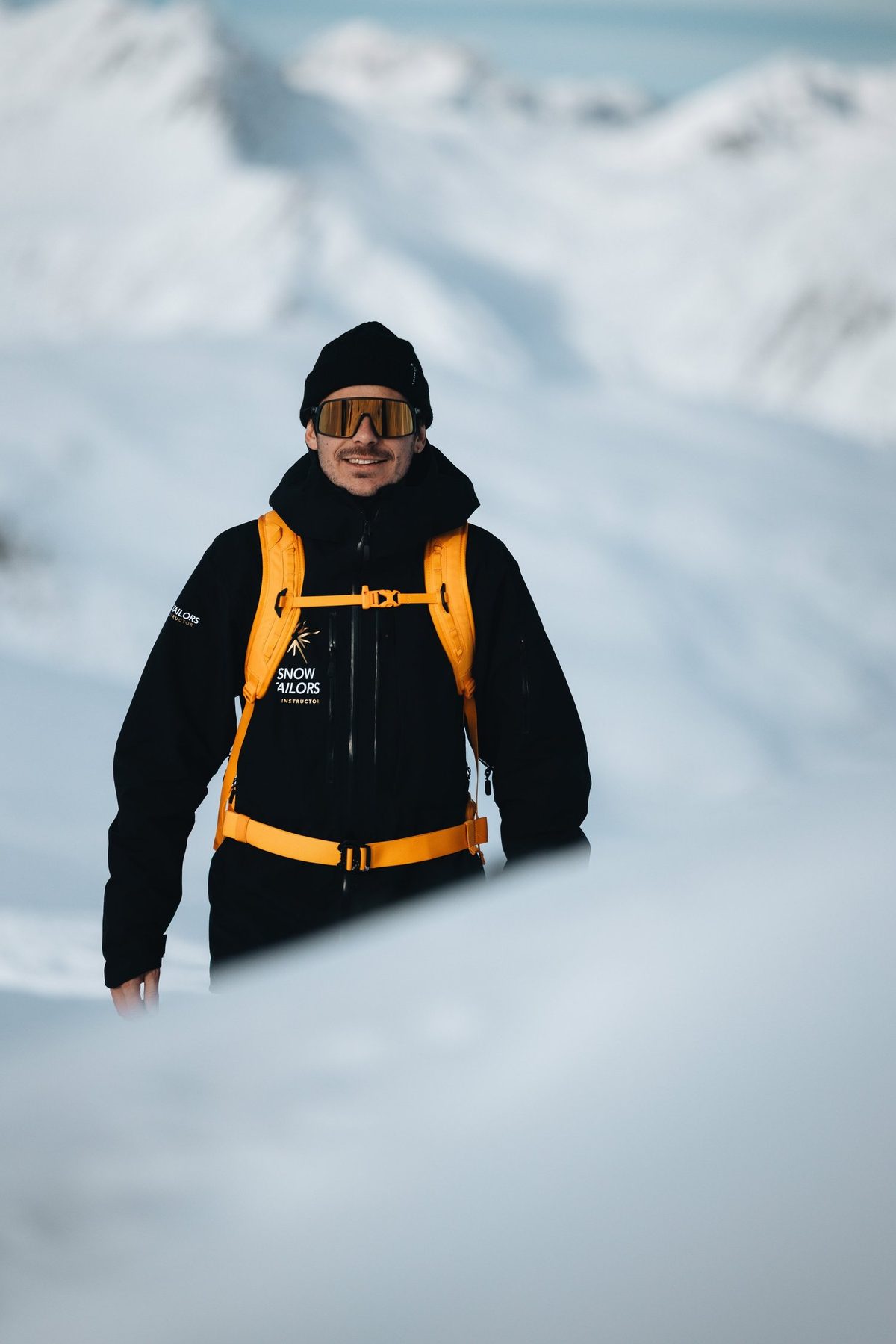
Click any portrait below to read the instructor's full page — bio, teaching style, favourite descents in the 3 Valleys, the families and disciplines they tend to work with. Each page also lists how to request that instructor specifically when you write to us.
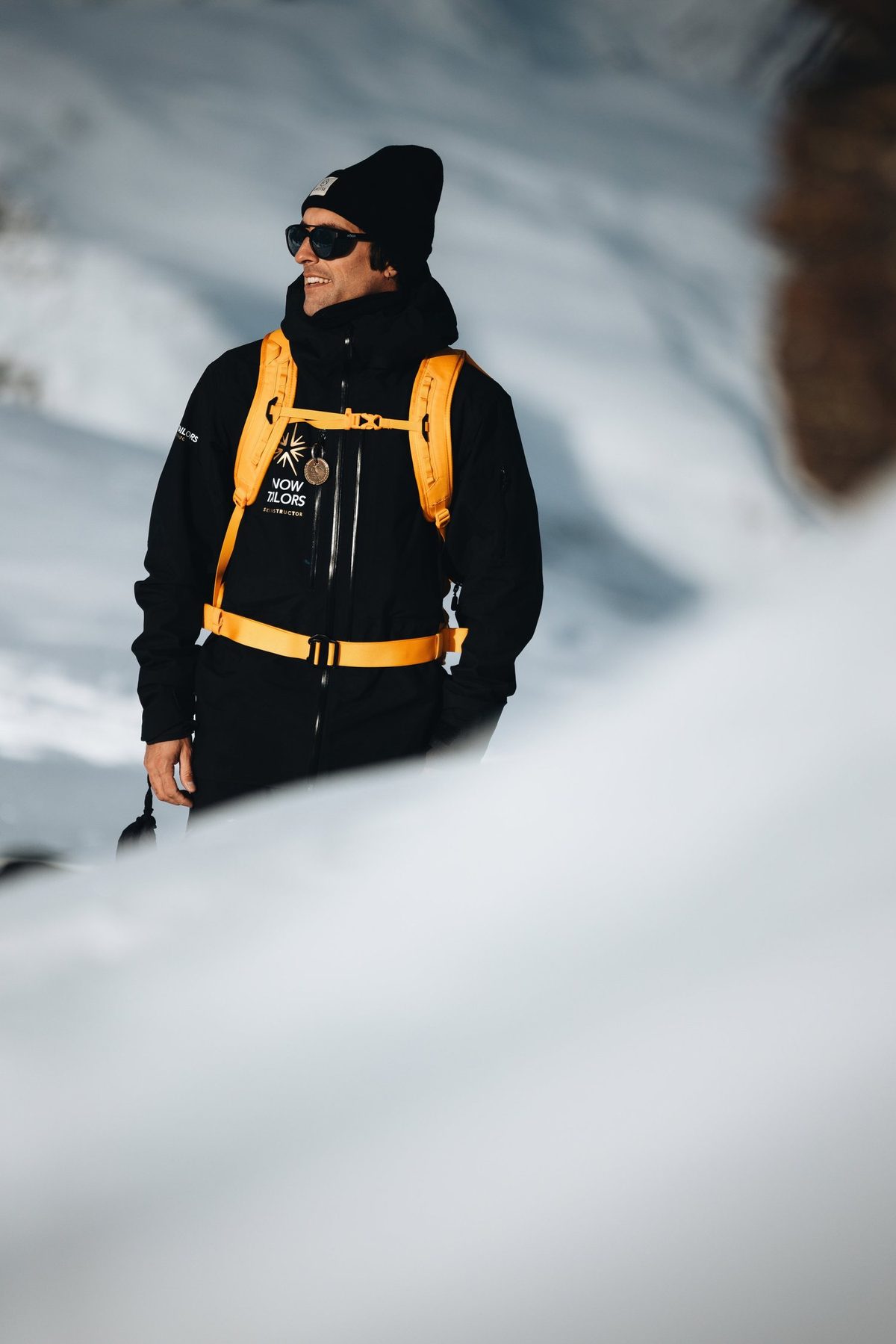
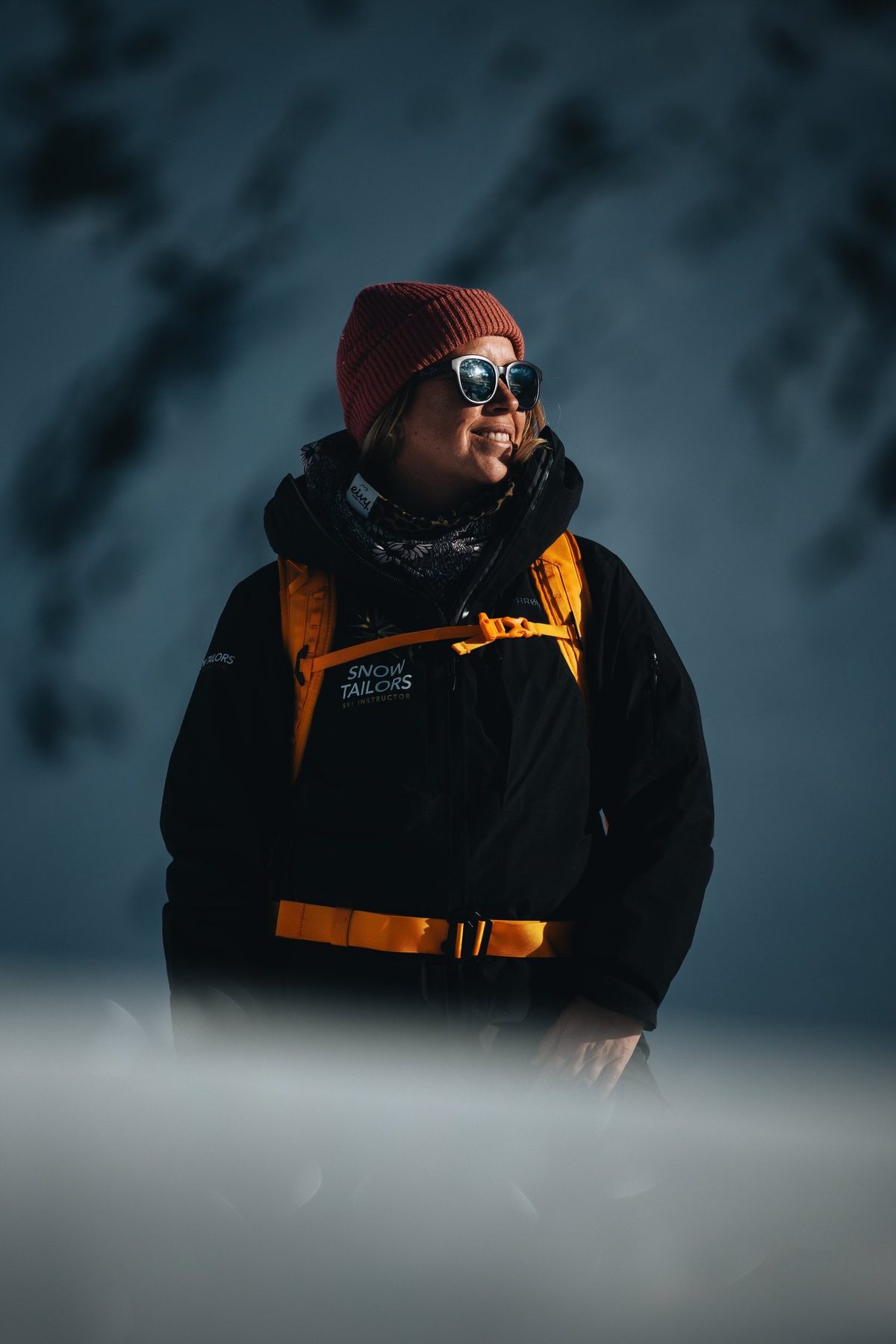
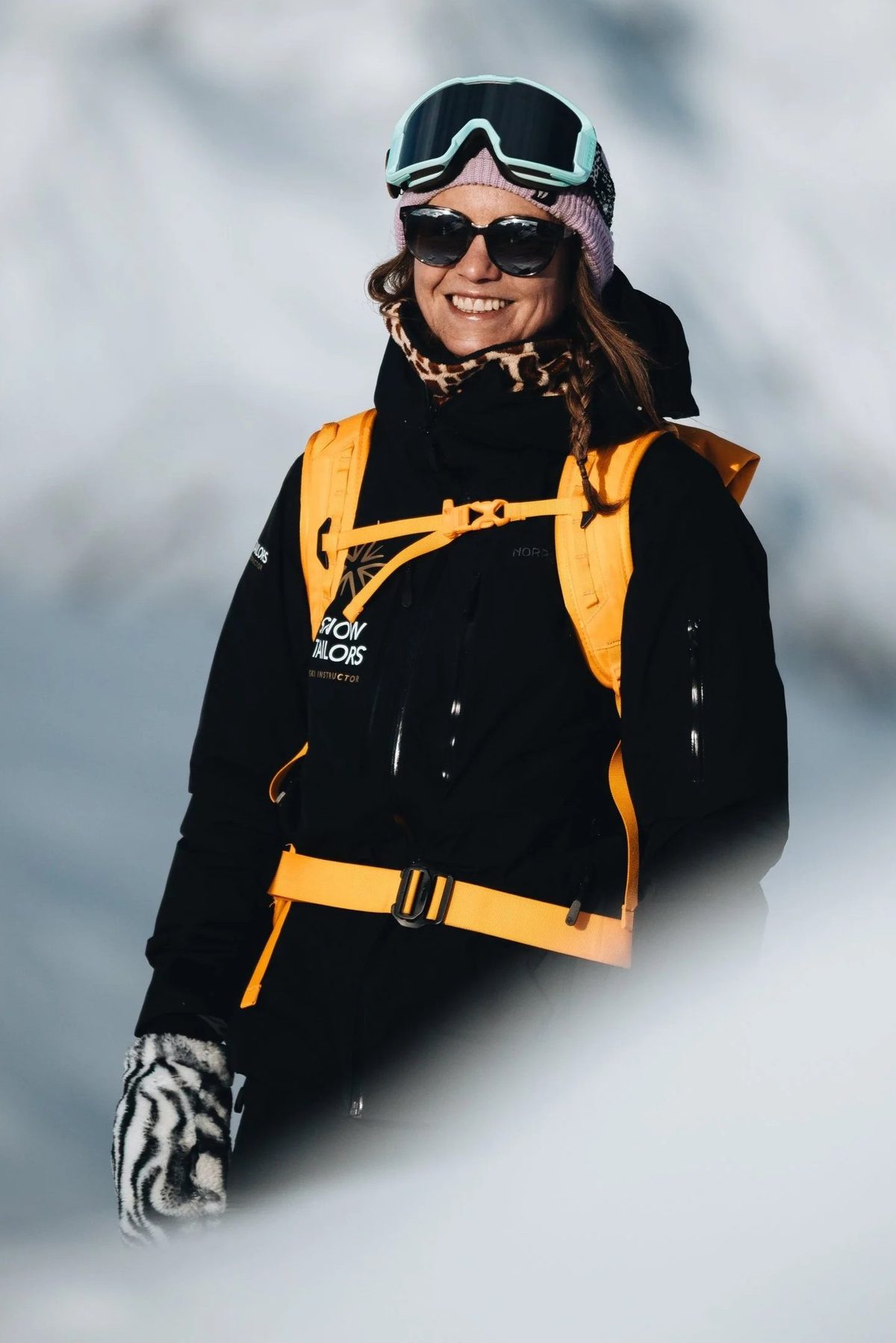
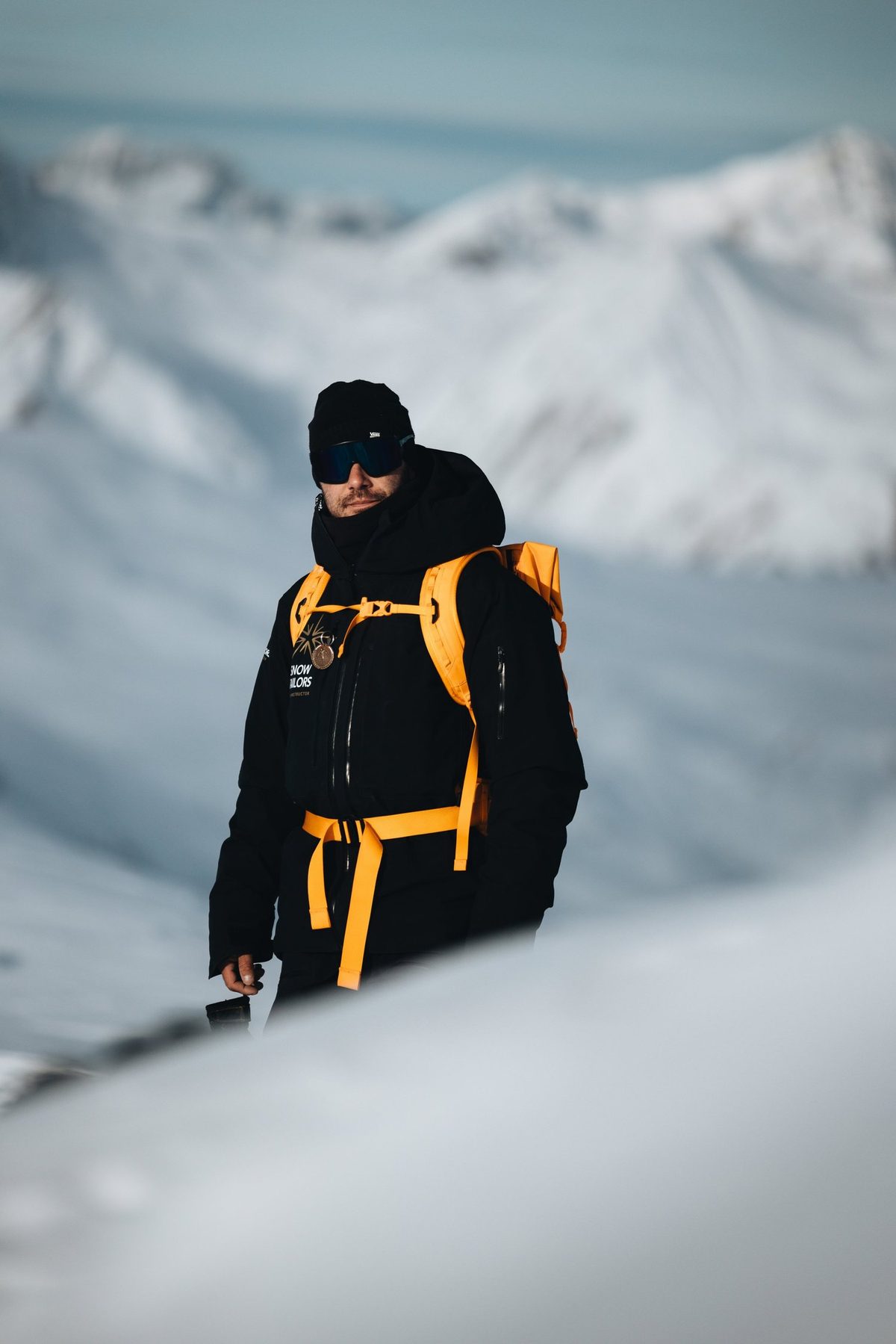
Where you might meet us.
All five instructors hold a professional licence to teach across the 3 Valleys, and any of them can be requested in any of the five villages. In practice, however, each has a corner of the domain they know best, and where we tend to send them when the choice is open.
Antoine Sangouard, who founded the school in Val Thorens, still considers the upper Belleville valley his ground. He skis the full 3 Valleys with equal fluency, but the families who book him for Christmas tend to be in Val Thorens, Saint-Martin or the Caron sector. Marion Levasseur divides her winter between Val Thorens and Les Menuires, with the off-piste of La Masse and the long traverses above the Lac du Lou as her preferred terrain. Justine Guyon is the instructor we send when a family is staying in Courchevel or Méribel with younger children — she has worked the Pralong and Altiport beginner zones for the better part of a decade.
Fabrice Galofaro splits his winter between Les Menuires (the Reberty stadium) and Méribel (the Roc de Fer training poles), where he runs his race-preparation programmes for older teenagers and adult amateurs. He is, on rest days, an exceptional all-mountain instructor — but his calendar is held first for racers. Grégoire Socquet, finally, is the instructor we send when a family is moving across the domain — staying perhaps in Saint-Martin, lunching at Mont Vallon, descending to Val Thorens by Tougnète. He skis everywhere with equal grace, and is requested most often by guests whose week defies a single village.
Working with Snowtailors.
We do not run an open application. The team grows by introduction, slowly, and we hold a small waiting list of names suggested by the existing instructors. If you are an ENSA-certified colleague, fluent in at least French and English, and interested in a long conversation about what we do — write to snowtailors@gmail.com with a paragraph about your skiing and your teaching. We answer all genuine letters, eventually, and the answer is sometimes no. It is rarely quick. It is always honest.